
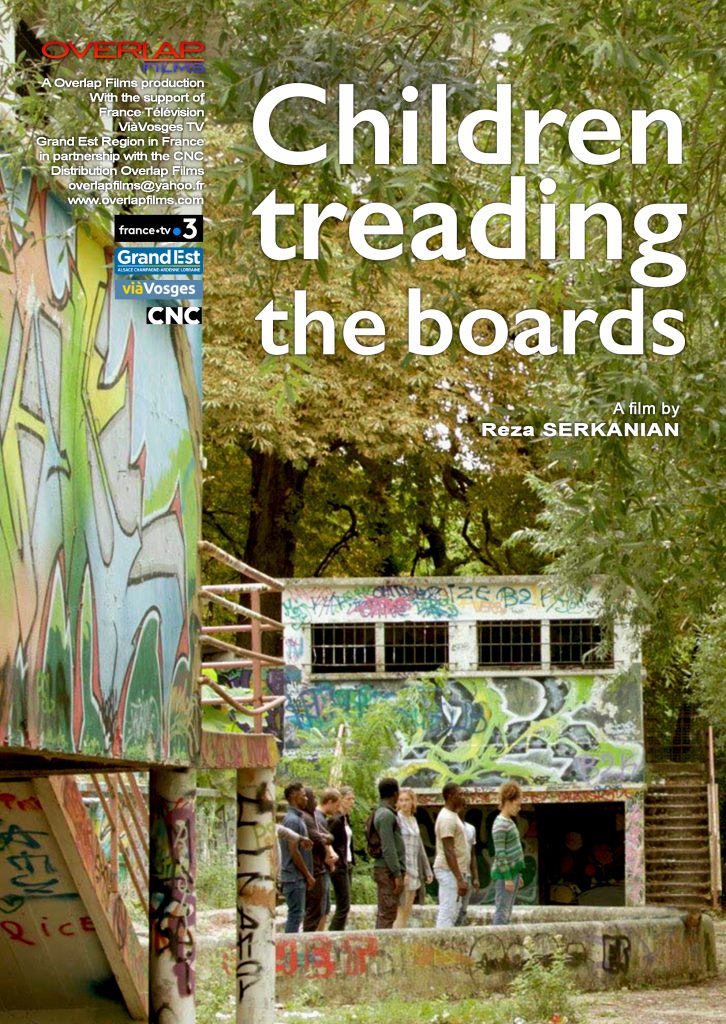
CHILDREN TREADING THE BOARDS
Documentary
Director: Reza Serkanian
Image & Edit: Reza Serkanian
Sound: Lionel Thiriet – Color grading: Benoit Poncelin
Music: Agnès Vincent – Song: Djeli Moussa Condé
Location: France, Grand Est Region
(Châlons-en-Champagne , Sarry, Mairy-sur-Marne)
Distribution: Overlap Films
Available on DCP – Video – DVD
Broadcast on France 3 TV: 2024 – 2025
Links: Allociné – UniFrance – IMDB
Year: 2020
Language: French (English subtitled)
Genre: Documentary
Duration: 52 min – Documentary
Shooting Format: Digital
Aspect Ratio: 16:9
Country of Production: France
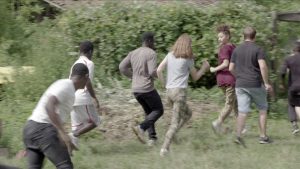
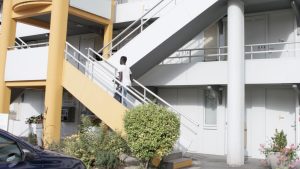
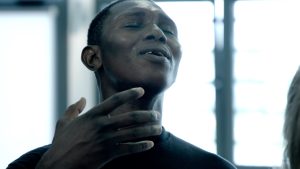


Watch an extract of the movie:
FESTIVALS:
Festival de Théâtre de Phalsbourg – France
Festival des cinémas d’Afrique de Besençon – France
Avec la participation du RTGE
(Réseau des Télévisions du Grand Est)
Alsace 20, Canal 32, Mirabelle TV, Vosges Television
Coproduction: Overlap Films, France Television, ViàVosges
With the support of the Grand Est Region, in partnership with the CNC



Press
Read Full Article
3 reasons to watch the documentary “Children treading the boards”
Article by Sophie Gueffier
His name was Denko Sissoko. A young man from another country. His tragic fate shook the daily lives of those who had shared his journey and set their voices free.
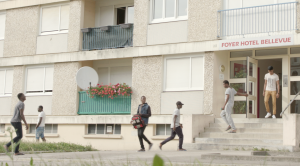
A tragic news story forms the backdrop of this vibrant documentary. On January 6, 2017, the young man from Mali threw himself from the eighth floor of a building in Châlons-en-Champagne.
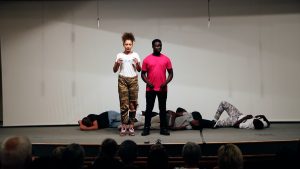
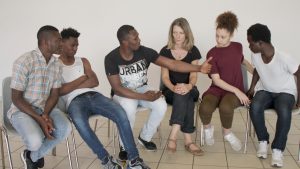
The summer following the tragedy, the other residents of his shelter took part in a theater workshop, guided with kindness by Marie-Pierre, and created a performance drawn from their own testimonies. Powerful, funny, and heartbreaking.
1 – Meeting a youth whose journey never seems to end
“I am not a foreigner because I am a migrant. A migrant is a traveler who goes from one country to another.”
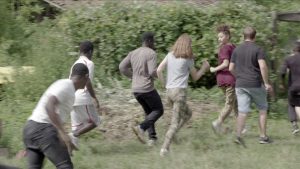
Sekou, Maria, Gaye, Salma, Mamadou, Koroba, Emmanuel, Kevin and the others made it to France, to Châlons-en-Champagne, after unspeakable odysseys. All of them are minors. They arrived alone or accompanied from Mali, Russia, Nigeria, Côte d’Ivoire and other African countries. Each has their own reason for exile, often fleeing a terrifying reality – war, massacres carried out by Boko Haram… What they found here was far from what they had imagined. Their path toward freedom and safety is far from over.
One of them says, in the face of rejection:
“We didn’t come here intending to do anything wrong. We left a situation that was not favorable to us.”
Their disappointment stems from their incomprehension in the face of that rejection.
“I came to look for a better life. I am on the way. I want to be part of society, to integrate.”
2 – Learning to share painful memories
For us in the West, speaking out, unburdening oneself, seems obvious. We are taught that “speaking sets you free.”
These young people carry heavy burdens. Their journeys have been long and filled with obstacles. Yet their cultures have not taught them to speak openly about their pain. Seeing a psychologist can feel like admitting you are mad. So other paths must be found to release their voices. The theater workshop becomes that path.
The young performers must learn to trust one another, and to do so they must get to know each other. To know each other, they must tell their stories. Through their silences, their anger, their held-back sobs – and even their laughter, when Mamadou tells the story of his sheep – they finally meet. Little by little, their fears, exhaustion and hopes take shape. And the play begins to emerge.
“Through theater, you manage to bring things out of yourself, and it feels good.”
3 – Bringing suffering to an end
They all know why they left their countries. Some expected difficulties; others imagined nothing. All faced the worst.
“When you are in Libya, consider yourself already dead. Everyone who has passed through there knows it.”
After surviving the ultimate ordeal of the sea, they hoped for rest, for welcome, for a better life. Yet their ordeal continues. Faced with suspicion, rejection and racism, they struggle to regain balance.
“Here, you die mentally. They gave me a bone test and told me everything I said was a lie. It kills you. More than anything I fled in my country.”
Another adds:
“I have no parents anymore. Here, I’ve lost my life. I am nothing, just as I was nothing back home. I am too tired.”
On stage, one after another, they shout: “I didn’t come here to suffer. Okay?”
Their companion in misfortune, Denko, could no longer bear the suffering.
Marie-Pierre – “the good woman” – Maria, the Russian mother, the volunteers from RESF, La Cimade, La Comète, and the educators chose to stand by these young people, helping them find again a path toward humanity and fraternity.
Through their example, and many others, France is still striving to live up to its motto.
Director
REZA SERKANIAN
Biography
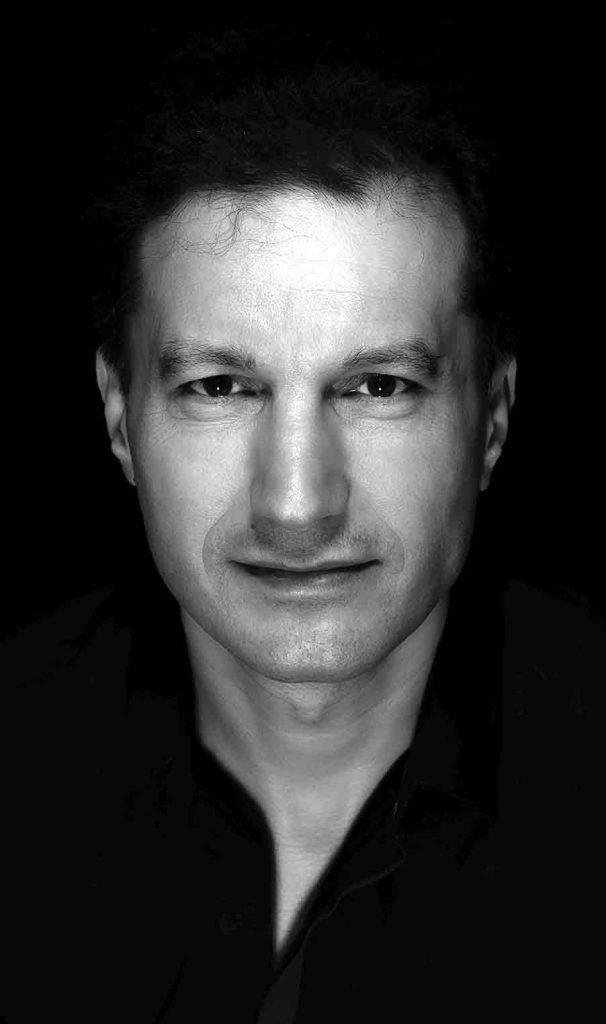
Reza Serkanian is an Iranian-born filmmaker active for over three decades in fiction and documentary. He began making short films at seventeen in Iran and gained early international recognition, with two selections at the Clermont-Ferrand Short Film Festival. After studying cinema in Tehran, he continued his artistic development at the Rijksakademie van Beeldende Kunsten in Amsterdam. He has been based in France since 1998 and works across Europe, Africa, and Iran, focusing on social realities and human relationships. He also works as an editor and cinematographer. His first feature film, Ephemeral Wedding, received the Sopadin & France Culture Screenplay Award and premiered at the Cannes Film Festival in 2011 before its release in France. After Playmakers, a documentary co-produced with France 3 for television, his new feature film Intruders will be released theatrically in France in 2026.
Filmography
INTRUDERS
2026 – Fiction – 80 min – Overlap Films – France
PLAYMAKERS
2020 – Documentary – 68 min – Overlap Films – France
CHILDREN TREADING THE BOARDS
2019 – Documentary – 52 min – Overlap Films – France
THE ROCK OF NARAYAMA
2018 – Fiction – 15 min – Overlap Films – France / Iran
EPHEMERAL WEDDINGS
2011 – Fiction – 83 min – Overlap Films – France
THOSE WHO EAT WOOD
2008 – Documentary – 50 min – Overlap Films – France / Gabon
ADRIEN’S ABSENCE
2004 – Documentary – 26 mn – Overlap Films – France
REUNION
2003 – Fiction – 25 min – 35mm – Overlap Films – France / Iran
IN PASSING
2002 – Fiction – 19 min – 16mm – Polygone Films – France
RETURN
2000 – Fiction – 30 min – 16mm – Valor Films – The Netherlands
PARASTOU
1995 – Fiction – 31 min – 35mm – Iran
BIRD IN THE WIND
1993 – Fiction – 42 mn – 16mm – Iran